Curing Agents are essential reactive components used in thermosetting powder coatings. They chemically crosslink with polyester or epoxy resins to create a solid, durable, three-dimensional coating network. This crosslinking determines hardness, weatherability, mechanical strength, chemical resistance, and long-term durability.
The two primary curing systems for polyester powder coatings are TGIC (Triglycidyl Isocyanurate) and HAA (Hydroxyalkyl Amide / Primid). Each curing agent delivers different performance characteristics, allowing manufacturers to design coatings for architectural façades, home appliances, industrial machinery, and protective metal finishes.
Key Advantages
1. Excellent Crosslinking Performance
Curing agents ensure strong molecular bonding with polyester resins, creating dense networks with superior hardness and mechanical durability. They significantly enhance the overall performance of powder coatings beyond what resin alone can achieve.
2. Strong Weather and Chemical Resistance
TGIC and HAA provide stable resistance against solvents, detergents, humidity, salt exposure, and elevated temperature. These properties help metal components remain protected in harsh or continuously used environments.
3. Flexible Formulation Design
Different curing agents allow customization for:
Outdoor and architectural performance
Indoor decorative finishes
Low-temperature curing systems
Rapid-cure production lines
Matte, textured, or high-gloss coatings
Cleaner and environmentally friendly formulations
4. Excellent Film Appearance
Proper curing results in smooth, uniform coatings with stable gloss, consistent flow, and minimal defects, ensuring high-quality appearance across large-batch production.
5. Environmental & Regulatory Advantages
HAA systems (Primid) are non-toxic, environmentally friendly, and suitable for markets with strict chemical regulations.
How to Use Curing Agents
1. Dry Blending
Curing agents are weighed and blended with polyester resin, fillers, degassing agents, leveling additives, and performance modifiers. Uniform dry mixing ensures stable reactivity during extrusion.
2. Melt Extrusion
During extrusion, curing agents must disperse evenly without premature reaction. A controlled temperature profile prevents pre-gelation and ensures proper melt flow.
3. Cooling and Grinding
Extruded materials are cooled, ground, and sieved. Stable particle size distribution improves electrostatic spraying behavior and film leveling.
4. Electrostatic Application
Powder coatings containing TGIC or HAA are applied to metal substrates under controlled humidity and grounding conditions to ensure uniform deposition.
5. Thermal Curing
Heat activates crosslinking.
Full crosslinking ensures optimal mechanical strength, chemical resistance, and durability.
TGIC vs HAA — Technical Comparison
| Property | TGIC System | HAA (Primid) System |
|---|
| Outdoor Weatherability | Excellent, high UV resistance | Very good, eco-compliant |
| Chemical Resistance | Very strong | Moderate to strong |
| Curing Temperature | ~180°C typical | 180–200°C |
| Film Appearance | Smooth flow, good gloss control | Excellent for matte & textured |
| Environmental Profile | Requires handling controls | Non-toxic, environmentally preferred |
| Mechanical Performance | Hard, impact-resistant | Balanced hardness & flexibility |
| Typical Applications | Exterior architecture, industrial | Architecture, indoor, general use |
5. Main Applications
A. Architectural Coatings
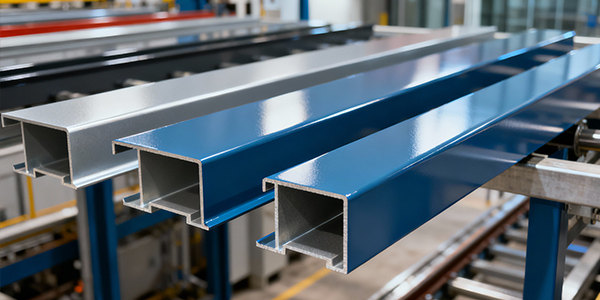
Architectural coatings demand excellent weatherability, UV resistance, color stability, and long-term durability. TGIC-based systems provide high outdoor performance, delivering strong chalking resistance and gloss retention, making them ideal for exterior aluminum profiles, curtain wall panels, and façade systems.
HAA systems, while slightly less UV-resistant, offer excellent stability and appearance retention and comply with strict environmental regulations. They are widely used in markets requiring non-toxic curing systems and in architectural aluminum applications where smoothness, uniform gloss, and environmental safety are key considerations.
B. Home Appliance Coatings
Smooth Appearance:
Curing agents ensure high-quality surface finish for appliance housings such as refrigerator panels, washing machine bodies, and air conditioner covers. HAA systems offer especially clean, low-yellowing appearance.
Mechanical Durability:
TGIC systems provide strong hardness and scratch resistance, helping coated appliances withstand daily handling and cleaning.
Stain & Chemical Resistance:
Proper curing improves resistance to detergents, oils, and common kitchen chemicals, supporting long life cycles in household use.
C. General Industrial Coatings
General industrial coatings require toughness, stability, and reliable corrosion protection for metal components used in factories, warehouses, and machinery. TGIC systems provide hardness and impact resistance ideal for heavy-duty metal brackets, machinery housings, and industrial frames.
HAA systems are chosen for applications needing controlled gloss or textured finishes—such as office furniture, racks, and metal panels—while providing balanced flexibility and adequate chemical resistance. The curing agent determines the final coating’s durability and long-term stability under mechanical stress and chemical exposure.
D. Protective Films and Functional Coatings
Corrosion-Resistant Layers:
TGIC provides excellent barrier performance when used in protective systems for metal pipes, conduits, and HVAC components.
Electrical Enclosures:
Curing agents enable chemically resistant, moisture-resistant coatings for electrical cabinets and power distribution metal parts.
Automotive Underbody Components:
TGIC systems offer strong mechanical durability and resistance to salt spray and road contaminants.
HVAC and Ventilation Systems:
Both curing systems enhance anti-rust performance on filters, housings, and ducting materials.
Application Advice & Key Considerations
1. Choose the Right Curing System
TGIC is recommended for severe outdoor conditions and high chemical resistance.
HAA is ideal for environmentally regulated markets and indoor or architectural applications requiring low yellowing.
2. Maintain Accurate Stoichiometry
Mismatch between polyester resin acid value and curing agent equivalent causes poor flexibility, uneven gloss, or loss of hardness.
3. Control Extrusion Temperature
Excessive heat may prematurely react the curing agent. Proper extrusion ensures smooth leveling and minimized film defects.
4. Ensure Surface Pretreatment
Clean, degreased, and pretreated metal dramatically improves adhesion and corrosion resistance.
5. Strict Curing Temperature Control
Under-curing leads to softness and poor chemical resistance.
Over-curing can cause brittleness or gloss drop—especially in HAA systems.
6. Safe Storage & Handling
Store curing agents and finished powder in cool, dry environments to prevent agglomeration or moisture contamination.