Silicone Resin is a high-performance polymer designed for powder coatings requiring exceptional thermal endurance, oxidation resistance, and long-term stability. Built on a robust Si–O–Si backbone, Silicone Resin delivers outstanding resistance to thermal degradation and long-term aging. In powder coating formulations, it serves as a key binder for heat-resistant systems and offers compatibility with curing agents, Fillers, and functional Additives used in high-temperature industrial applications.
Key Advantages of Silicone Resin
1. Outstanding High-Temperature Resistance
Silicone resin maintains its structural integrity under extreme temperatures from 200°C to 600°C. Once cured, it forms a stable film that resists gloss loss, cracking, adhesion decline, and yellowing. This makes it a preferred choice for thermal-loaded metal components such as exhaust systems, industrial ovens, chimneys, and heating modules.
2. Excellent Oxidation and Thermal Shock Resistance
In long-term heat exposure or thermal cycling, silicone resin prevents oxidation, discoloration, and film fatigue. Its anti-cracking and anti-flaking properties ensure consistent film durability even under rapid temperature changes—supporting components such as heat exchangers, burners, boilers, and high-load industrial metal structures.
3. High Mechanical and Chemical Durability
Silicone resin forms a dense three-dimensional network with high hardness, strong adhesion to metal substrates, and resistance to chemical fumes and smoke corrosion. This durability is valuable in automotive, industrial heating, and heavy-duty environments.
4. Strong Compatibility with Fillers and Additives
The resin mixes well with thermal-resistant fillers (barium sulfate, silica), flow agents, degassing additives, and curing systems, ensuring predictable melt-flow behavior and stable appearance during extrusion and spraying.
Recommended Usage Method
1. Premixing & Formulation Design
Silicone resin is introduced at the premix stage with curing agents, fillers, and additives. Uniform distribution enhances heat performance and ensures stable reaction behavior during service. It is compatible with inorganic pigments required for thermal resistance.
2. Extrusion & Homogenization
During extrusion, silicone resin melts and disperses into the formulation.
Recommended extrusion temperature: 95–110°C, ensuring flow uniformity without premature curing.
This process creates a consistent melt suitable for electrostatic application.
3. Cooling, Grinding & Sieving
After cooling, the material is ground and sieved to obtain stable particle distribution.
Silicone resin improves powder flow, reduces pinholes, and enhances electrostatic charging efficiency.
4. Curing & Film Formation
Typical curing temperature: 180–220°C.
At these temperatures, silicone resin forms a hard, oxidation-resistant coating network capable of long-term heat endurance.
Main Applications of Silicone Resin
1. Powder Coating Formulations
Silicone resins are widely used in powder-coating systems. They participate in polyester, epoxy, and hybrid cross-linking reactions, significantly improving the coating’s heat resistance and durability. Their impact on film appearance is relatively low compared with other organic resins, making them suitable for high-performance formulations requiring thermal stability.
2. Heat-Resistant Industrial Coatings
Silicone resins are frequently added directly into heat-resistant coatings. Different dosage levels influence heat-resistance performance—a typical recommended loading is ≥15% (based on effective resin solids). If better resin compatibility is needed, silicone resins can be pre-reacted or used through grafting techniques to obtain more uniform performance.
3. Weather-Resistant Silicone Coatings
Weather-resistant silicone coatings have broad industrial adoption. Through chemical bonding with organic resins, they deliver strong outdoor durability, UV resistance, thermal stability, and moisture resistance, meeting the requirements of standards such as HG/T 2006–2022 “Heat-Resistant Powder Coating”.
Silicone Resin Technical Comparison Table
| Characteristics (Parameter) | PCT-9013 | PCT-9018 | PCT-6618 |
|---|
| Functional Group | Silanol | Silanol | Silanol |
| Silanol Content (%) | 5 | 6 | 5 |
| Silica Content (%) | 56 | 54 | 50 |
| Degree of Substitution | 1.14 | 1.10 | 1.23 |
| Phenyl:Methyl Ratio | 1.3:1 | 1.2:1 | 2.7:1 |
| Molecular Weight (×1,000) | 2–4 | 2–4 | 1.5–2.5 |
Typical Physical Properties
| Physical Item | PCT-9013 | PCT-9018 | PCT-6618 |
|---|
| Active Content (%) | 99 | 99 | 99 |
| Glass Transition Temperature Tg (°C) | 47 | 41 | 48 |
| Specific Gravity | 1.32 | 1.30 | 1.31 |
| Closed Cup Flash Point (°C / °F) | 138 (280) | 138 (280) | 138 (280) |
A. Heat-Resistant Powder Coatings
Silicone resin is widely used as the main binder in high-temperature powder coating systems, delivering superior thermal resistance and oxidation durability. Its compatibility with fillers and heat-resistant additives enables stable performance even under prolonged heat exposure.
Application Performance Table
| Industry | Typical Components | Operating Temperature |
|---|
| Home Appliances | Ovens, IR heaters, baking equipment | 200–350°C |
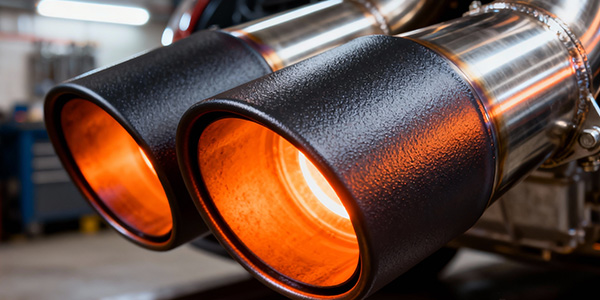
| Automotive | Exhausts, mufflers, turbo shields | 300–600°C |
| Industrial Heating | Furnaces, chimneys, burners | 250–500°C |
| Aerospace & LED | Thermal plates, engine covers, LED modules | 250–450°C |
Silicone resin ensures exceptional stability without film cracking, yellowing, or adhesion failure. It supports the development of long-term thermal protection systems required in automotive, industrial heating, aerospace, and electronic thermal management environments.
B. Other Industrial Applications
1. High-Temperature Adhesives & Sealants
Silicone resin enhances thermal resistance and bonding strength, making it suitable for sealants operating under continuous heat exposure.
2. Electrical Insulation Coatings
Its dielectric stability and resistance to thermal degradation make it effective in coatings for motors, transformers, and high-temperature insulation materials.
3. Specialized Anti-Corrosion Coatings
Although epoxy dominates general corrosion protection, silicone resin is preferred for metal structures exposed to both heat and oxidative stress.
4. LED Thermal Protection & Optical Coatings
Silicone resin provides clarity, UV stability, and thermal endurance needed in LED modules, optical encapsulation, and protective coatings.
Application Recommendations & Key Considerations
1. Recommended Dosage
Silicone resin is generally used at 10–20% of total resin solids to achieve balanced heat resistance, gloss stability, and film strength. Higher levels may be required for applications above 450°C. The exact dosage should be confirmed through heat-aging, adhesion, and thermal shock testing to ensure the coating meets target performance without affecting extrusion or final appearance.
2. Formulation Compatibility
Silicone resin must be uniformly dispersed during premixing and extrusion to prevent film defects. Its compatibility with fillers, curing agents, and additives helps achieve stable flow, smooth leveling, and long-term heat resistance. Proper formulation testing ensures that the resin remains stable during thermal aging and does not cause gloss fluctuation or surface irregularities.
3. Metal Substrate Treatment
High-temperature applications require excellent substrate preparation. Metal surfaces must be clean, oil-free, and free of rust to ensure optimal adhesion. Pretreatments such as degreasing and conversion coatings help prevent blistering or delamination during thermal cycling. A properly prepared substrate significantly enhances the coating’s durability under long-term heat exposure.
4. Curing Optimization
Accurate curing is essential for developing silicone resin’s mechanical strength and heat stability. Undercuring reduces hardness and thermal shock resistance, while overcuring may affect gloss or flexibility. Monitoring actual metal temperature—not just oven settings—ensures consistent crosslinking. Proper curing produces a dense, stable film ideal for high-temperature environments.
5. Processing Safety & Storage
Silicone resin powders are VOC-free, but standard safety protocols remain necessary. Maintain good ventilation during processing and use proper protective equipment. Store powders in cool, dry conditions to prevent moisture absorption, which can reduce charging efficiency and lead to surface defects. Correct handling ensures consistent application quality and coating appearance.