




Why Does My Powder Coating Have Orange Peel?
Orange peel is one of the most common appearance defects in powder coatings. The surface looks textured instead of smooth, and the gloss and DOI can drop even when color and coverage are acceptable. In production, orange peel is rarely caused by a single mistake. It typically happens when melt flow, wetting, leveling time, and cure behavior are not aligned, so the surface micro-topography is locked in before the film can fully level.
At PCOTEC, we solve orange peel by treating it as a film-formation control issue. We use additive design to adjust surface tension balance, improve dispersion and wetting, and extend the effective leveling window so your coating can reach a smooth surface under real line conditions.
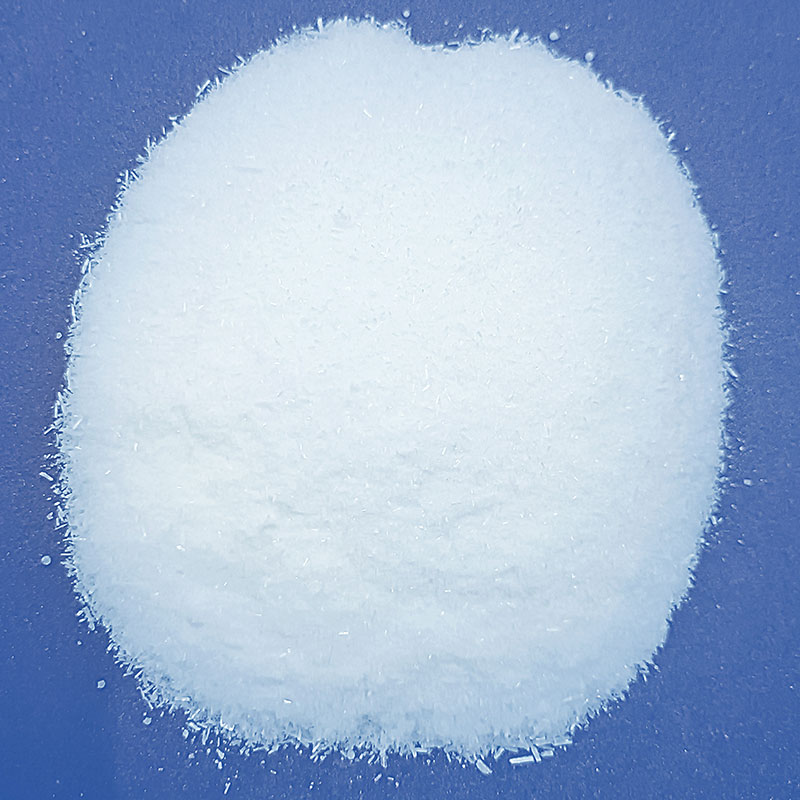
Table of Contents
- Orange Peel Formation Mechanism In Powder Coatings
- Formulation Factors That Commonly Drive Orange Peel
- Process Conditions That Convert Minor Instability Into Visible Texture
- Additive Strategy For Orange Peel Control
- PCOTEC Leveling Agent Mode For Orange Peel Reduction
- Diagnostic Checklist And Corrective Actions
- PCOTEC Support For Custom Formulations And Scale Production
- Conclusion
Orange Peel Formation Mechanism In Powder Coatings
Orange peel forms when the molten powder does not level into a uniform surface before gelation and cure lock the structure. After the powder melts, the film must wet the substrate, coalesce, flow, and level. If any of these steps is interrupted, the surface retains micro-waves or micro-hills and valleys.
Common physical triggers include:
Melt viscosity staying too high during the leveling window
Surface tension gradients that cause uneven flow
Poor wetting of pigments, Fillers, or substrate
Too-fast gelation that freezes the surface early
Non-uniform heating that creates different flow times across the part
Orange peel is therefore a combined outcome of formulation behavior and process timing.
Formulation Factors That Commonly Drive Orange Peel
Orange peel frequently appears after color changes, Resin adjustments, filler changes, or attempts to improve hardness or chemical resistance. The formulation-related drivers usually fall into these groups:
Resin flow and viscosity profile
If the resin system becomes higher viscosity during melt, leveling becomes incomplete. This can happen even when the powder sprays well and cures fully.Pigment and filler loading
High pigment volume concentration, certain fillers, or wide particle-size distribution can increase melt resistance and reduce surface smoothness.Additive balance and dispersion quality
If flow modifiers, leveling agents, or wetting aids are not compatible or not well dispersed, local flow differences appear, creating surface texture.Gas release and micro-void formation
Micro-porosity or shrinkage cavities can accompany orange peel. Even when pinholes are not obvious, micro-defects still scatter light and reduce smoothness.
When orange peel shows up intermittently, the root cause is often dispersion stability plus small process variations, not a single major error.
Process Conditions That Convert Minor Instability Into Visible Texture
Even with a stable formulation, orange peel can appear when the process window is narrow. The most common production triggers are:
Part metal temperature variation
If the part heats unevenly, some zones have enough leveling time while others gel early.Film build inconsistency
A film that is too thick can trap flow waves, while a film that is too thin can reveal substrate texture and look uneven.Cure schedule and oven profile
Rapid ramp-up or an aggressive cure profile can shorten the leveling phase. A slightly slower gel can often improve smoothness without changing final cure.Pretreatment and contamination
Surface tension disturbances from oils or residues can cause localized flow disruption that looks like orange peel, especially on large flat panels.
Orange peel control improves dramatically when the formulation is designed to tolerate realistic line variation rather than requiring perfect conditions.
Additive Strategy For Orange Peel Control
Orange peel is most effectively controlled by Additives that stabilize film formation at the surface. A strong additive strategy typically targets three technical levers:
Surface Tension Adjustment
The molten film needs a stable surface tension environment. When gradients exist, the surface flows unevenly and freezes as texture.Film Homogenization
A coating must behave like a uniform melt. If pigments or fillers are not well wetted or dispersed, the melt flows unevenly and creates micro-waves.Leveling Promotion Within The Cure Window
The coating must level before gelation. A good leveling system increases the chance of achieving a smooth surface even when part temperature varies.
PCOTEC designs additives to deliver these levers in a controlled way so orange peel is reduced without introducing contamination or creating recoat issues.
PCOTEC additive reference
PCOTEC Leveling Agent Mode For Orange Peel Reduction
PCOTEC Leveling Agent Mode is developed to adjust surface tension, homogenize the coating, and promote leveling. In production, this directly targets the primary drivers of orange peel and helps eliminate shrinkage cavity behavior associated with unstable melt flow.
Technical Indicators
| Item | Specification |
|---|---|
| External View | White Flowing Powder |
| Active Ingredients | At Least 65 Percent |
| Solid Content | At Least 97.5 Percent |
| Flash Point | Above 100 ℃ |
| pH | 7 |
Performance And Use Characteristics
We use an acrylate polymer as the active ingredient to support stable leveling behavior.
We apply special processing technology so the product disperses easily in powder coating formulations.
We recommend a typical dosage range of 0.6 to 0.8 percent of the total powder, then final dosage is confirmed through trials based on resin system and target appearance.
We include a wetting accelerator to improve wettability, supporting uniform film formation.
We design the product without silicone components, avoiding contamination risk and maintaining stable recoating adhesion.
We make it suitable for all powder coating systems where surface smoothness and leveling stability are required.
This combination makes Leveling Agent Mode particularly effective when orange peel is caused by surface tension imbalance, dispersion instability, or insufficient leveling time.
Diagnostic Checklist And Corrective Actions
To reduce orange peel efficiently, start with a structured diagnosis. The goal is to identify whether the defect is driven primarily by flow limitation, wetting instability, cure timing, or thermal non-uniformity.
Troubleshooting Guide
| Symptom Pattern | Most Likely Cause | Practical Correction Direction |
|---|---|---|
| Orange peel across the entire part | Melt viscosity too high or leveling window too short | Improve leveling support, adjust cure ramp, verify additive balance |
| Orange peel only in thick areas | Local gel timing and trapped flow waves | Reduce film build variation, strengthen leveling and wetting behavior |
| Orange peel only in specific zones | Part temperature gradient | Verify oven profile, improve robustness of leveling window |
| Orange peel with shrinkage cavities | Micro-voids and unstable coalescence | Improve wetting, stabilize melt flow, verify volatile control |
| Orange peel after color change | Pigment dispersion or compatibility shift | Rebalance additive package, confirm dispersion quality and dosage |
Corrective actions often work best when you combine process optimization with a targeted leveling additive rather than pushing one variable aggressively.
PCOTEC Support For Custom Formulations And Scale Production
Orange peel control becomes more complex when you must hit appearance targets across multiple colors, resin families, and part geometries. PCOTEC supports customers by aligning additive selection with the full formulation behavior and the intended production window.
Our typical support includes:
Matching leveling additive behavior to resin viscosity profile and cure speed
Improving dispersion and wetting stability for pigment-heavy or filler-rich systems
Defining a practical trial plan to lock dosage and processing boundaries
Supporting OEM/ODM programs and bulk order supply where batch-to-batch repeatability is critical
We aim to reduce surface defects without introducing silicone contamination risk, while keeping recoating adhesion stable and maintaining manufacturability.
Conclusion
Powder coating orange peel is primarily a film-formation issue. It occurs when wetting, melt flow, and leveling are not stable enough within the cure window, causing surface micro-texture to freeze before the film becomes smooth. A robust additive strategy corrects surface tension balance, improves melt homogeneity, and increases leveling stability, which is why leveling additives are often the fastest and most controllable path to reducing orange peel.
If you are seeing orange peel across different colors, resin systems, or part geometries, PCOTEC can support you with additive selection, dosage optimization, and formulation-level adjustment. Share your coating system type, cure schedule, film build range, and orange peel severity, and we will recommend a suitable leveling solution and sampling plan for your project.