




How To Make Outdoor Trash Can Smell Better?
Outdoor trash-can odor is normally caused by food liquid, organic waste, bacteria, heat, and moisture remaining inside the container. Spraying fragrance into the bin may temporarily cover the smell, but it does not remove the source.
The most effective solution is to empty the container, wash away residue, allow it to dry, improve bag management, and keep the lid and surfaces in good condition.
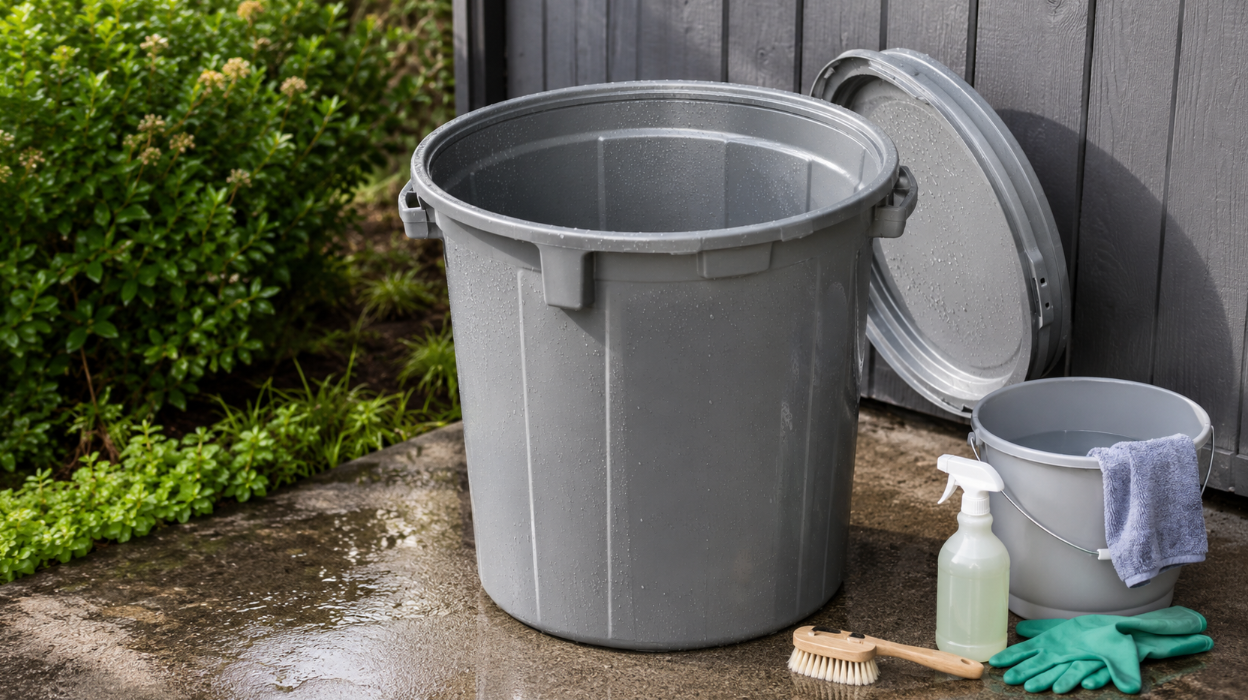
Table of Contents
Remove the Source of the Odor
Odor control should begin with the waste itself. Cleaning products cannot work effectively when liquid, food scraps, or damaged bags remain inside the bin.
Empty the Bin Regularly
Do not leave food and organic waste inside an outdoor container longer than necessary, especially during warm weather.
When collection is infrequent, seal strong-smelling waste in a separate bag before placing it inside the main liner.
Check for Leaking Bags
A torn bag allows liquid to collect at the bottom of the trash can. Even after the waste is removed, this residue may continue producing odor.
Use bags that fit the container properly and avoid overfilling them. Wrap sharp packaging to reduce punctures.
Wash the Trash Can Thoroughly
A proper wash should cover the base, walls, lid, handle, hinges, wheels, corners, and seams.
Start With Water and Detergent
Rinse away loose residue and use water, detergent, and a long-handled brush to scrub the interior.
Pay particular attention to recessed areas where dirty water may remain. Cleaning only the visible side walls may leave odor-producing residue at the bottom.
Use Disinfectant Carefully
A suitable disinfectant may be applied after physical dirt has been removed. Follow the product label and check whether it is compatible with plastic, galvanized steel, stainless steel, or powder-coated metal.
Never mix bleach with ammonia, acidic cleaners, or other chemicals because dangerous gases may form.
Clean the Lid and Contact Areas
The underside of the lid, handles, hinges, and wheels are frequently overlooked. These areas may collect liquid and organic residue when bags are inserted or removed.
Wash them separately and rinse away the remaining cleaner when required.
Dry the Container Completely
Moisture allows odor and microbial growth to return quickly, even after the bin has been washed.
Leave the Lid Open
Place the container in a secure, ventilated area and keep the lid open until the interior is completely dry.
Do not install a new bag while water remains at the bottom.
Prevent Rainwater From Entering
Check whether the lid closes correctly and whether the bin is positioned beneath roof runoff.
Store it on a stable surface and avoid locations where rainwater regularly enters the container.
Control Odor Between Collections
Once the bin is clean and dry, several simple habits can help keep it fresher.
Use Absorbent Materials
A small amount of baking soda or a purpose-made bin deodorizer may help absorb minor moisture and odor.
These products should be used according to their instructions and should not replace regular washing.
Seal Food Waste
Meat packaging, seafood residue, dairy waste, and other organic materials can create strong odors quickly.
Place these items in sealed bags and keep the outside of the bag clean before putting it into the main container.
Keep the Lid Closed
A properly fitting lid can reduce rain entry and limit access for insects and animals.
Damaged lids, hinges, or seals should be repaired when they prevent the bin from closing correctly.
Why the Surface Condition Matters
Trash-can odor is mainly a hygiene issue, but the surface finish can affect how easily the container is cleaned.
Smooth Coatings Are Easier to Maintain
A smooth, continuous coating creates fewer rough areas where dirt and liquid can collect.
Scratches, peeling film, corrosion, and damaged seams may make cleaning more difficult and allow contamination to remain after washing.
Outdoor Exposure Damages Weak Finishes
Outdoor bins face sunlight, rain, temperature changes, impact, detergents, and repeated movement.
A suitable coating should balance weather resistance, adhesion, flexibility, hardness, and cleaning resistance.
The Role of Polyester Resins
Polyester Resins do not remove trash-can odor. Their role is to act as film-forming binders in thermosetting powder coatings for suitable metal containers and outdoor equipment.
Polyester resin properties such as molecular weight, acid value, and glass-transition temperature influence flow, leveling, gloss, storage stability, and final coating performance.
Outdoor Weather Resistance
Properly formulated polyester powder coatings can support color retention, gloss stability, and resistance to outdoor weathering.
The final result also depends on the curing agent, pigments, Additives, filler level, metal pretreatment, coating thickness, and oven conditions.
Mechanical Performance
Outdoor bins are moved, emptied, and impacted repeatedly. A balanced polyester system can contribute to adhesion, flexibility, hardness, and resistance to cracking or chipping.
Different Surface Effects
Polyester powder coatings can be formulated for gloss, matte, textured, or other decorative effects.
The finish should match the product’s cleaning requirements, manufacturing process, and expected outdoor environment.
Our Factory Supply Capabilities
Our factory supplies Polyester Resins for outdoor and general-purpose powder-coating systems, together with compatible Curing Agents and formulation materials.
Stable Technical Parameters
We control important indicators such as acid value, viscosity, color, solid content, glass-transition temperature, and melt behavior.
These properties influence extrusion stability, curing response, film appearance, and repeat production.
Support for Different Curing Systems
Available polyester resin systems include TGIC-cured, HAA-cured, hybrid, and specialty solutions.
Buyers can select grades according to outdoor durability, gloss, curing temperature, mechanical properties, and regional compliance requirements.
Keep the Trash Can Fresher
Empty it regularly, clean spills early, keep the lid closed, and allow the container to dry after washing.
A well-maintained surface cannot replace good waste management, but it can make regular cleaning easier and reduce areas where residue remains.
Get a Polyester Resin Quotation
Producing powder coatings for outdoor waste bins, street furniture, metal cabinets, or municipal equipment? Send us your curing system, target gloss, weathering requirement, curing schedule, color range, and expected volume. We will recommend suitable Polyester Resins and prepare a quotation for laboratory evaluation.
Previous: Are F1 Cars Rear Wheel Drive?