




Are Front Wheel Cars Good in The Snow?
Front-wheel-drive cars can perform well in light and moderate snow when they have suitable tires and are driven carefully.
Because the engine and transmission are commonly positioned over or near the front axle, additional weight is placed above the driven wheels. This can help the vehicle move away from a stop on slippery roads.
However, front-wheel drive does not guarantee strong braking or cornering. Tire type, tread condition, temperature, road surface, driver behavior, and vehicle stability systems all affect winter performance.
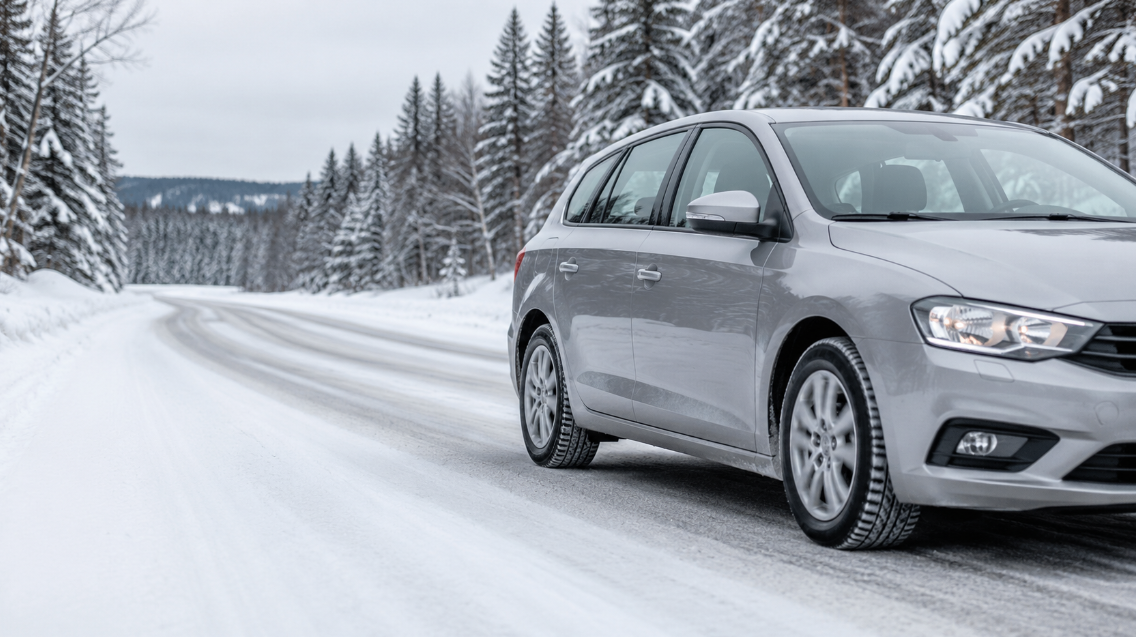
Table of Contents
- Why Front-Wheel Drive Can Help in Snow
- Where Front-Wheel Drive Has Limitations
- Why Winter Tires Matter More Than the Drivetrain
- Is All-Wheel Drive Always Better?
- How a Polyester Resin System Relates to Winter Vehicles
- How Our Factory Supports Powder-Coating Producers
- Prepare the Vehicle Before Winter
- Get a Polyester Resin System Proposal
Why Front-Wheel Drive Can Help in Snow
Front-wheel-drive vehicles use the front tires for both steering and acceleration.
Weight Over the Driven Wheels
The weight of the engine and transmission can increase the load on the front tires.
This may improve initial traction when starting on a slippery surface, especially compared with some lightly loaded rear-wheel-drive layouts. Manufacturer service information also notes that front-wheel-drive vehicles may offer additional winter traction because of powertrain weight over the drive wheels.
Predictable Handling
When the front tires lose grip during a turn, the vehicle commonly continues toward the outside of the corner.
Many drivers find this understeer behavior easier to recognize than sudden rear-wheel oversteer. It is still necessary to reduce speed and avoid abrupt steering.
Simple Road-Car Packaging
Front-wheel drive combines the engine, transmission, and driven axle near the front of the vehicle.
This layout is widely used in family cars, compact vehicles, and daily transportation because it supports practical cabin space and familiar handling.
Where Front-Wheel Drive Has Limitations
The same front tires must manage steering, acceleration, and a large share of braking.
Steep Uphill Roads
When the car accelerates uphill, weight transfers toward the rear while the driven wheels remain at the front.
This can reduce front-wheel traction on a steep snowy slope. Smooth acceleration and steady momentum are more effective than sudden throttle input.
Deep Snow
Ground clearance may become more important than drivetrain type when snow is deep.
A low passenger car may struggle if snow builds up beneath the body, even when the front tires still have some traction.
Braking and Cornering
Front-wheel drive does not create extra braking grip. All four tires contribute to stopping and directional control.
The vehicle can still slide if the tires cannot grip the road surface.
Why Winter Tires Matter More Than the Drivetrain
Tires are the only parts of the vehicle that contact the road. Drivetrain systems can distribute available torque, but they cannot create grip when the tire compound and tread are unsuitable.
NHTSA notes that winter tires are more effective than all-season tires in deep snow.
Install Winter Tires on All Four Wheels
Winter tires should be fitted as a complete set rather than only on the driven axle.
Installing winter tires only on the front of a front-wheel-drive car can leave the rear tires with less grip during braking or cornering, increasing the risk of a rear skid.
Check Tread and Pressure
Inspect tire pressure when the tires are cold and check for worn tread, cracking, or damage.
Cold weather changes tire pressure, while worn tread reduces the tire’s ability to manage snow and slush.
Avoid Sudden Inputs
Accelerate, steer, and brake smoothly. Leave more space between vehicles and reduce speed before entering a corner.
Rapid control inputs can exceed the limited grip available on snow or ice.
Is All-Wheel Drive Always Better?
All-wheel drive can improve acceleration by sending power to more than one axle, but it does not automatically improve braking or cornering.
AWD Still Depends on Tires
An all-wheel-drive vehicle using unsuitable tires may have less braking and cornering grip than a front-wheel-drive vehicle equipped with appropriate winter tires.
Bridgestone notes that all vehicle layouts, including AWD, FWD, RWD, and 4WD, still depend on tire grip in snow and freezing conditions.
Select the Complete Vehicle Setup
The right choice depends on local weather, road maintenance, hills, snow depth, ground clearance, tires, and driver experience.
Front-wheel drive can be practical for many winter environments when the vehicle is properly prepared.
How a Polyester Resin System Relates to Winter Vehicles
A polyester resin system does not improve snow traction. Its role is to help powder-coating manufacturers protect and decorate suitable metal components.
Automotive Metal Components
Powder coatings may be used on wheels, brackets, roof-rack components, workshop equipment, charging housings, transport structures, and other suitable metal products.
Outdoor polyester systems can provide a balance of weatherability, adhesion, flexibility, hardness, and appearance.
Exposure to Winter Conditions
Vehicle-related metal parts may face moisture, road salt, temperature changes, sunlight, dirt, and cleaning chemicals.
The resin contributes to coating performance, but corrosion protection also depends on pretreatment, primer selection, edge coverage, film thickness, curing, and maintenance.
Different Curing Routes
A Polyester Resin System may use TGIC, HAA, hybrid, or another curing route depending on the target market and performance requirements.
PCOTEC’s product range includes TGIC-cured, HAA-cured, hybrid, and specialty polyester resin systems.
How Our Factory Supports Powder-Coating Producers
Our factory supplies polyester resin systems for outdoor, general industrial, automotive-related, architectural, and specialty coating applications.
Controlled Technical Indicators
Acid value, viscosity, glass-transition temperature, color, melt behavior, and reactivity affect extrusion, curing, gloss, flow, and storage stability.
These indicators are monitored to support more consistent batch performance.
Application Matching
Buyers should provide the substrate, pretreatment method, curing temperature, target gloss, mechanical tests, weathering requirement, and regional compliance needs.
Our technical team can compare suitable resin grades and support formulation trials before commercial production.
Prepare the Vehicle Before Winter
Front-wheel-drive cars can be suitable for snow when they have the right tires, adequate tread, correct pressure, and a careful driver.
Reduce speed, increase following distance, clear snow from the vehicle, and avoid assuming that the drivetrain can compensate for poor road conditions.
Get a Polyester Resin System Proposal
Manufacturing powder coatings for automotive accessories, wheels, transport equipment, outdoor metal parts, or winter-service products? Send us your curing route, substrate, curing schedule, target gloss, weathering requirements, and expected order volume. We will prepare a suitable Polyester Resin System recommendation and quotation.
Previous: How Do You Powder Coat at Home?