




How To Restore Teak Outdoor Furniture?
Teak outdoor furniture is valued for its natural durability and attractive grain, but long-term exposure to sunlight, rain, dust, and temperature changes will gradually alter its appearance. Untreated teak commonly changes from a warm golden-brown color to a silver-gray patina.
This color change does not necessarily mean that the furniture is damaged. Restoration should begin by checking the condition of the wood and deciding whether you want to preserve the gray appearance or recover a warmer original tone.
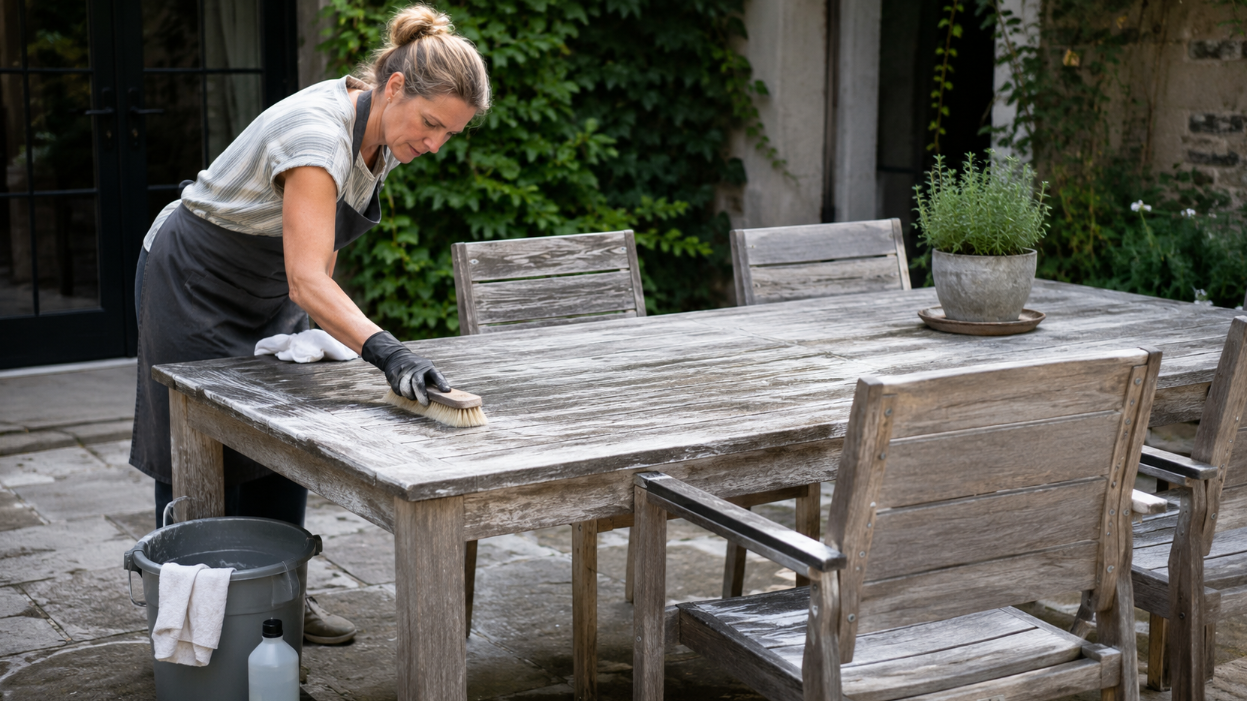
Table of Contents
Assess the Furniture Before Restoration
Before applying any cleaner, oil, or protective product, inspect the complete furniture structure. Surface discoloration, mold, loose joints, cracked wood, and damaged metal parts require different treatment methods.
Identify Normal Teak Weathering
A uniform gray surface is generally the result of natural weathering. Teak can develop this appearance outdoors without losing its basic structural properties. Owners who like the silver-gray finish may only need to clean the surface periodically.
Uneven black marks, green growth, greasy stains, or rough grain may require more detailed cleaning. Soft areas or deep cracks should be checked before cosmetic restoration begins.
Check Joints and Hardware
Inspect screws, hinges, brackets, feet, and metal frames for movement, corrosion, or coating damage. Tighten loose fasteners carefully without forcing them into weakened wood.
If the furniture combines teak with aluminum or coated steel, remember that wood cleaners may not be suitable for every metal finish. Test any product on a small hidden area first.
Clean the Teak Surface Properly
Cleaning removes dust, organic residue, and loose surface contamination. Begin with a mild method before considering stronger restoration products.
Use Mild Soap and Water
Rinse away loose dirt, then wash the teak with warm water, mild detergent, and a soft brush or cloth. Work in the direction of the wood grain.
Avoid aggressive wire brushes and high-pressure washing at close range. Excessive force may raise the grain and create an uneven surface.
Rinse and Dry Completely
Remove all detergent residue with clean water. Place the furniture in a shaded, ventilated area and allow it to dry fully.
Do not apply oil, protector, or another treatment while the wood is still damp. Trapped moisture may lead to uneven absorption or discoloration.
Restore the Original Teak Color
If you prefer the original golden-brown appearance, additional cleaning or light sanding may be required.
Apply a Teak-Specific Cleaner
Use a cleaner made specifically for outdoor teak and follow its instructions. Apply it evenly so that one area does not remain wet much longer than another.
Test the cleaner on an inconspicuous section before treating the entire table or chair, especially when the previous finish is unknown.
Sand Only When Necessary
Fine sanding may help remove raised grain, stubborn weathering, or an uneven surface. Sand gently with the grain and avoid changing edges, curves, or joint dimensions.
Heavy sanding should not be used simply because teak has turned gray. The gray patina can be a normal cosmetic change rather than damage.
Select a Suitable Final Treatment
Teak can be left untreated, maintained with a teak protector, or treated with a product recommended by the furniture manufacturer.
Avoid applying random varnishes or industrial Resins directly to the wood. Teak contains natural oils and expands or contracts with environmental changes, so an unsuitable rigid coating may peel or crack.
Where Silicone Resin Fits Into Outdoor Products
Silicone Resin is not a consumer teak oil or a direct wood-restoration product. Its role is mainly as a high-performance binder in industrial coatings that require heat resistance, weatherability, chemical resistance, and long-term stability.
Heat-Resistant Metal Components
Silicone-resin coating systems may be used on suitable metal components exposed to elevated temperatures, such as heating equipment, burners, oven parts, exhaust components, and thermal enclosures.
For outdoor furniture, this may relate to selected metal parts used around fire tables, heating structures, barbecue accessories, or other heat-exposed products.
Mixed-Material Furniture
A teak furniture product may combine wood with steel legs, brackets, frames, or heating components. The wood and metal should not be treated with the same material.
Teak needs a wood-compatible maintenance solution, while the metal may use a polyester, epoxy, or Silicone Resin coating system according to its temperature, weathering, and chemical-resistance requirements.
How Our Factory Supports Coating Manufacturers
Our factory supplies silicone resin, polyester resin, epoxy resin, Curing Agents, Additives, and other raw materials for powder-coating production.
Application-Based Resin Selection
For Silicone Resin projects, buyers should provide the substrate, expected operating temperature, curing schedule, target finish, pigment system, and required film performance.
The selected grade should match the complete coating formulation rather than being chosen only by the resin name.
Controlled Resin Production
Key indicators such as viscosity, acid value, glass-transition temperature, melt behavior, color, and solid content influence coating extrusion, curing, appearance, and storage stability.
Our production and laboratory systems support batch monitoring and technical coordination for industrial coating manufacturers.
Maintain the Restored Furniture
Clean leaves, dirt, and food residue regularly. Keep the furniture where rainwater can drain instead of collecting around joints and feet.
Use breathable covers and avoid sealing damp furniture beneath plastic. Inspect metal components and coatings during seasonal maintenance so that loose fasteners or surface damage can be addressed early.
Request Silicone Resin Information
Developing heat-resistant powder coatings for outdoor heating products, metal furniture components, industrial ovens, or thermal equipment? Send us your substrate, service temperature, curing conditions, required finish, and purchasing quantity. Our team will recommend suitable Silicone Resin options and prepare a quotation for your formulation tests.